Saturday, June 8, 2019

Your complete guide to banana growing in Uganda

Are you planning to start commercial banana growing in Uganda? Just looking to start a small banana plantation in your backyard and are looking around the internet for tips and ideas? ...  Or your looking online to buy bananas/banana suckers for planting your Matooke?
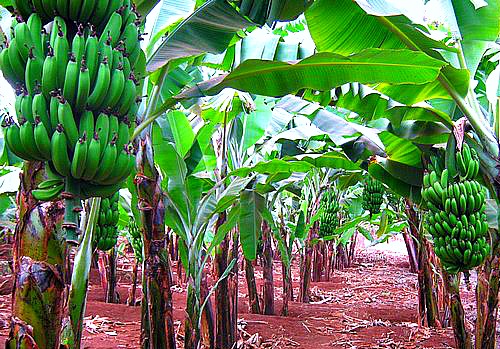
Banana Plantation in UgandaBanana Plantation in Uganda
Whatever your banana growing quest is in Africa, please take time to read through this Uganda plant guide for answers; We answer common questions that any succefful banana grower in Africa should ask.
We discuss how you can grow one of Uganda's favorite traditional foods....!
Scientifically bananas are classified in the Family; musacae, with genera; ensete and musa. Bananas are perennial herbs and grow up to 5m or more. Banana is one of the major food security crops in Uganda as the crop supplies food to people almost all the time. Aside of food, bananas in Africa are used to produce local brew, and these crops also supplement animal feed.
In this Uganda Banana Plant guide you will find information about:

Banana varieties in East Africa

We have three main groups of banana plants in East Africa:
The East African Highland Banana: these are the most dominant in the region especially in Uganda. They include the cooking type (Matooke) and the brewing type (Mbidde) and these two types are physically similar.
The plantains: (e.g. Gonja) these are mostly grown in the high lands of kasese in Uganda, the crop is not widely grown and is eaten roasted.
The cultivars of the East African coast: these include the edible Sukalindizi dessert banana eaten ripe, kisubi a brewing type, kayinja also a brewing type and kivuvu a cooking and brewing type.


Environmental factors you will need to grow Bananas

You will need the appropriate climate, the right soils and your land should be well prepared.
Agro Climate; Banana grows best at a temperature of about 27°C. The grow bananas and flowering are negatively affected at lower temperatures. Banana grows best when they receive 1500-2500mm rain per year which is well distributed over the year. The crop grows best where relative humidity is at least over 60%.
Soil requirements; Banana requires a deep, well drained loam soil with high humus content. Banana best grows in soil pH ranging from about 5.6-7.5. It doesn’t tolerate acidic soil. The crop needs an adequate supply of potassium, nitrogen, magnesium, calcium and phosphorus.
Land preparation: land should be slashed and prepared without burning to protect organic matter. About two ploughings are sufficient to provide a good seed bed for banana. The drainage channels or soil conservation bunds are established along the contours.
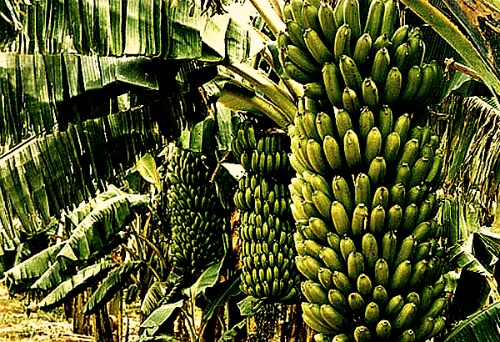

What to plant when you want to grow bananas in Africa

You can propagate/Plant your Bananas vegetatively or by breeding. The vegetative method however is the commonest among our farmers, and you will be able to use any of these planting materials below:
Peepers; these are very young suckers appearing above the ground with scale leaves only.
Sword suckers; these are formed from buds or eyes low on corm and bear narrow elongated leaves, these are usually 30_60 cm tall with. These are the most preferred material as they are usually firm in the ground.
Maiden sucker; these are relatively old with greater than 60cm and when are used for propagation it’s advised that the leaves should be cut off to try minimize water loss.
Bits of large corms; they are obtained from corms which have bared a bunch. They are dug up; the upper parts are removed and are cut in two or more pieces each containing one or more eyes.
Water suckers; these are young with broad leaves and arise from the top parts of the corms. Always avoid planting these types of suckers as they are usually easy to dislodge from the mother plant and are usually weak.
Before planting, you should ensure that the suckers are clean, and free from pests and diseases. Your suckers should be cleaned by paring (cutting off all the roots and peeling off the outer layer of the corm). Paring should be done until all tunnels made by weevils have been removed. The pared suckers should be hot water treated to kill nematodes.

So how best should you Plant your bananas in the soil

The best time for planting your bananas will depend on your local climatic conditions.
In areas with pronounced dry season and yet irrigation is not possible, you will typically plant at the beginning of the rains.
You will plant your bananas in holes dug by hand. Your banana holes should be roughly (45x45x45) cm, with a recommended spacing of (3x3) m.
Mix well rotten manure or compost (1-2) tins with top soil and return it to the hole.
Put the sucker in the middle of the hole and cover with the rest of the soil.
If you chose to use corm bits, be sure NOT to bury your corms deep; cover with just a 5cm layer of soil.


How to Manage your Banana plantation in Uganda

Here we discuss how you will Desucker, how to mulch, how to stake, how to Bag , how to deflower and how to apply fertilizers on your plantation.
Desuckering; this involves uprooting of excess suckers from a banana mat, you will this in order to suit the harvest frequency. Removing of the side shoot is done until the emergence of flowers 1-3 stems at most per mat (i.e. the bearing one, the follower and the sucker). Sucker management is important to avoid high mats and to maintain proper spacing. High or many suckers per mat could easily fall.
Mulching; this is used to conserve moisture in the soils, and to reduce rainfall runoff to avoid erosion. Mulch also improves the soil as the mulch material rots. However, mulch is known to serve as breeding place for banana weevils and other pests. Additionally, if you placed your mulch too close to the mother plant it will affect the growth of the young suckers. The means you need to work out a balanced approach to mulching your banana plantation in Uganda.
Staking; Bananas are susceptible to winds and should be staked to provide extra support to the banana stems. Banana cultivars that bear very big bunches are most susceptible to heavy winds. You normally do your banana staking using a forked pole.
Bagging; this involves majorly covering the banana bunch with a treated polythene bag to minimize sooty mold (Furry growth of fungus), insect damage and abrasion injury to the fruits.
Deflowering; once all the fingers have developed the rest of the inflorescence including the male flower bud) should be removed to reduce incidences of fungus and insect attack.
Fertilizer requirements: Bananas absorb a lot of nutrients from the soil. Therefore there is need to for you to replenish the soil using external sources like the farm yard manure, crop residues, homestead and kitchen refuse. You should however avoid applying metals or polythene on your banana plants. You should never apply manure too close to the banana mat as this would encourage banana weevils to breed and will also result in the high mat condition.


How to harvest your Bananas in Uganda

Your bananas should mature within 3-6 months.
Mature bananas are hard; the flower bract is dry and breaks off easily from the fruit tip.
Harvest your banana bunches with a curved knife, or a sharp panga, you will need to cut the bunch stem carefully.


Quick Tips for growing your Bananas 

  • On a prepared land dig up pits of size of (45x45x45) cm or 2ftX2ft.
  • Leave the pits exposed for some time to enable soil pests get exposed to sunshine.
  • Refill the pit with soil mixed with farmyard manure (10Kg).
  • Put suckers in the middle of the pit and soil around it compacted to keep it firm.
  • Water immediately to provide moisture to the planted sucker.
  • During planting, it is also advisable to use inorganic fertilizer like DAP or TSP at a rate of 200g per plant in case the manure is not enough

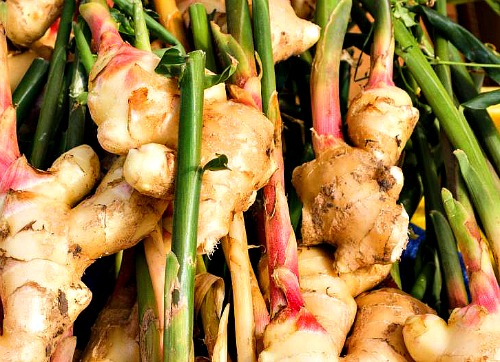
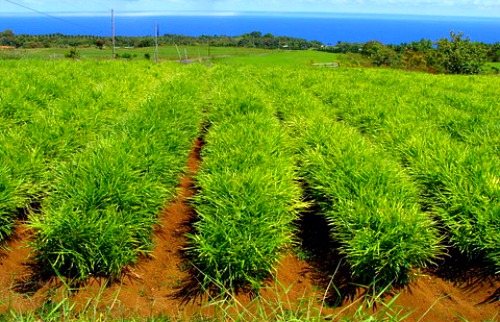
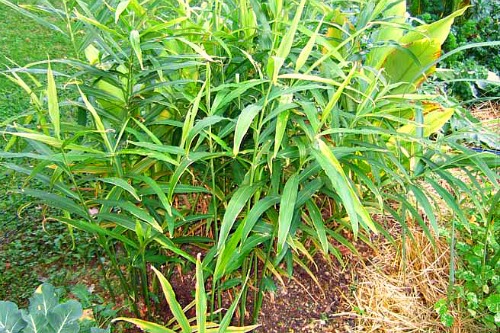
How to grow ginger.Your complete guide to ginger farming in Uganda

How to Grow Ginger in Uganda 

...or you're just a farming enthusiast wishing to try out Ginger planting in your backyard and are now  online for tips on how to plant ginger?
Well, the good news is; you don't have to start from scratch...!
Ginger is known by the scientific name is Zingiber Officinale and in Luganda it is called Entangawuzi.
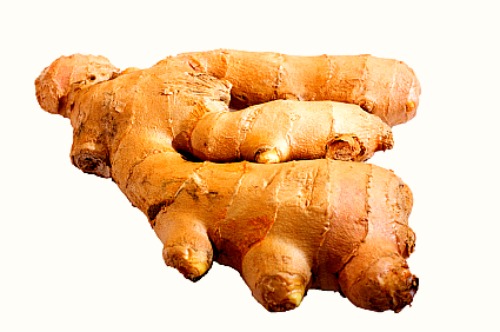
This Uganda plant has a long history of use for relieving digestive problems such as nausea, loss of appetite, motion sickness and pain. The root or underground stem (rhizome) of the ginger plant can be consumed fresh, powdered, dried as a spice, in oil form or as juice.
Regarding the local market, Ginger is highly demanded here in Uganda, Congo and the Southern Sudan.
The rhizome is mostly sought after for its characteristic Pungent and aromatic smell.
Ginger is grown in tropical and sub tropical regions of the world for its spice and medicinal value.
It’s a perennial herbaceous monocotyledon, usually grown as annual.
On this Uganda agribusiness guide you will find Tips and Techniques that will help you start a successful commercial scale ginger growing project in Africa.
We have included useful information about..:
  • Ginger varieties in Uganda
  • Soil requirements for Ginger
  • How to propagate Ginger
  • How to prepare land for planting Ginger
  • How to plant Ginger in Uganda
  • How to plant Ginger on a small plot of land
  • How to mulch and how to control weeds
  • How to apply Manure your Ginger plantation
  • Ginger diseases to keep an eye on
  • How to harvest Ginger in Africa
  • Quick Tips for planting Ginger
  • Where to buy Ginger Rhizomes for Seed, home consuption or for Industrial use
You also have the opportunity to Here about the Plant Guide about growing Ginger in Uganda.

Common Ginger varieties in Uganda

There are two common varieties like the land race with small rhizomes and the hybrid with big rhizomes.


Soil requirements for growing Ginger

Ginger has a wider adaptability for different soils, and for higher yields the soil should be loose, friable and offer minimum resistance to rhizome development.
Like most plants, ginger prefers mildly acidic soils. If soil is alkaline adjust it a pH between 6.1- 6.5 pH using a garden pH kit.

How to propagate Ginger

Ginger is propagated vegetatively from rhizome. Usually seed rhizomes with sprouts or buds are used in planting.
To prepare seeds for planting, you cut the rhizomes into pieces of 2.5-3.7cm with one eye or more.


How to prepare land for planting Ginger in Africa

Ginger can be planted in pots for home or direct to the field for commercial farmers.
Mix garden soil with an equal amount of well rotted compost, this should do you the trick.
Solarize beds and land before planting to remove pets and disease causing organisms.

How to plant Ginger in Uganda

Ginger planting should be done late in the dry season or early wet season in tropical countries like Uganda.
Make sure you select a spot where the plants get plenty of light but not direct sun, and protection from wind.
There two distinct methods of cultivation i.e., 3x1m beds are laid out at a distance of 30-45cm from each other and small shallow pits for planting are then made on the beds at required spacing. Then a handful of cattle manure is applied to each of these pits.
Planting can be done on ridges, a mixture of manure and soil is applied in the form of a 5cm thick ridge. In between the rows 20-25cm apart, seed rhizomes are placed at a required distance in rows and earthen up to make ridges 15-20cm high.
Then the field is given alight irrigation soon after sowing.


How to plant Ginger on a small plot of land

You will use the Dug Up Method to grow commercial scale Ginger on small portion of land.
Planting Ginger using the dug up method is simple and less time consuming.
This relatively new method requires just a little space of land but gives high returns.
Instead of using an acre of land to harvest One (1) ton of ginger you will only need to use well organized portions of land to get the same amount of ginger.
Under the dug up method you dig up holes in your garden that you feel with organic materials and animal waste. You then leave the organic material to rot in the hole to create a soft ground for the ginger to grow.
You have to protect your dug up holes from water logging, direct sunlight and strong winds until the ginger sprouts out.
You could harvest over 10,000 kilograms of ginger from holes you dig on just 1/4 acre of land.
You will NOT need a huge chunk of land to grow ginger on commercial scale with this dug up method


How to mulch and control weeds on your Ginger plantation

Mulching ginger with green leaves is essential to enhance germination of seed rhizomes, mulching also helps to controll weeds.
It helps to add organic matter and conserve moisture during later part of the cropping season.
Mulch again the plant on the 40th and 90th day after planting.
Use of lantana camara in mulching may reduce the infestation of shoot borer.
You will have to weed your ginger according to the intensity of weed growth.

How to apply Manure in your Ginger Garden

Application of well rotten cow dung or compost at 5-6 tones per hectare may be made as a basal dose while planting the rhizome in the pits.
Coffee husks are also good fertilizers for the ginger crop. An acre can take about 3 to 6 Lorries. The husks can be applied before planting. They are spread out evenly in the whole field and then covered with soils.
Phosphate is also another good fertilizer; an acre requires a supply of about 50kg. These are mixed in the soils at planting.


Ginger diseases to watch out for, in your garden

Watch out for Soft rot or rhizome rot. When selecting your planting area avoid water lodged areas because they predispose Ginger plants to infection.
The solarisation of soil you do at the time of bed preparation can reduce fungal infection.
Trichoderma a biocontrol agent against fungal diseases of plants could also be used to control fungal infections.
You can also carefully affected rhizomes from your garden.


Ginger harvesting and post harvest handlin in Africa

Ginger is ready for harvest in 8-10 months depending upon the maturity of the variety. When fully mature, leaves turn yellow and start drying up gradually untill thy drop off.
It’s during this stage that clumps of ginger are lifted carefully with a spade or digging fork.
Separate rhizomes from dried leaves, roots and adhering soil.
It is advisable to leave the crop unharvested for the first year and it sprouts again and is harvested at the second year. In this way, the yields increase.
The Ginger yield will depend on many factors; like fertility of the soils, supply of rains, and others but if all goes well, an acre can produce about 2 to 8 tons and a hectare could produce 15-25 tones using the convential planting methods.


Quick Tips for planting Ginger in Uganda

  • Choose ginger roots that are plump and free of wrinkles, with visible eyes at the end of the fingers.
  • Cut the rhizomes into pieces but should be with sanitized knife into pieces of 2.5-3.75 cm.
  • After cutting, leave the pieces in dry location for a few days to allow them to heal (this enables them to form a protective collus over the cut surface which reduces the risk of infestation).
  • Open up shallow pits for planting, if you are planting bigger sizes of rhizomes plant them 10 cm deep and for the small ones 5cm.
  • Alternatively you can open up shallow trenches in rows, then place seed rhizomes at a required distance in rows and earthen up to make ridges 15-20cm high.
  • Then give the field a light irrigation soon after sowing. Mulch to conserve the moisture.
  • Harvest your ginger in 8-10 months after planting.


Ginger in Uganda

Uganda Poultry Farming Guide


Uganda Poultry Farming Guide


Whether you’re just starting out in poultry farming or you’re already in the Chicken raring business, this farming Business guide, can help you maximize profit from your poultry farm. 
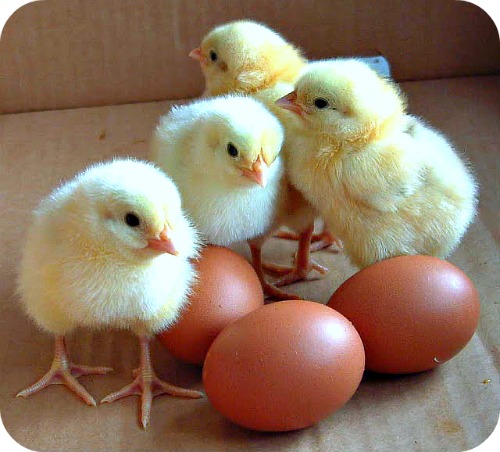
Chicks & Eggs: Uganda Poultry Farming Guide
Poultry farming is the raising of domesticated birds such as chickens, turkeys, ducks, and geese, for the purpose of farming meat or eggs for food. Poultry are farmed in great numbers with chickens being the most numerous. More than 50 billion chickens are raised annually as a source of food, for both their meat and their eggs. Chickens raised for eggs are usually called laying hens/layers whilst chickens raised for meat are often called broilers.
The Africa Uganda Poultry Farming Guide focuses on providing information, tips and advice to help you start and operate a profitable chicken raring business in Uganda. The free information in this guide would not be available without the generous support from Our Dedicated Network of Poultry Farmers.
What you will find in this guide:

Chicken Farming as a Business in Uganda

Uganda is estimated to have between 40 and 50 million chickens. Of these, at least 30 million are hybrids, while the rest are local breeds. Most of the hybrids are kept in closed shelters. Local chicken are mainly kept on a free-range system, where they look for food for themselves. 
Although local chicken are commonly referred to as enkoko enganda (Buganda chicken), Buganda is not the leading chicken-keeping region in the country. Bunyoro, Lango and Teso regions have the highest number of local chicken. On the other hand, Buganda region has most of the hybrid chicken are” almost 90%. 
Hybrid chicken is more expensive to keep, but you get higher returns than the local breeds. For example, you need a good shelter and money to buy feeds and drugs for the chicken. However, if you’re rearing broilers, you can get a return on your investment in just two months, while local chicken you will need at least seven months before you can sell the birds off as food. 
There is a ready market for chicken and chicken products across the country and in the region. This is why irrespective of other factors, chicken prices have risen from an average sh7,000 two years ago, to around sh10,000 for hybrids and sh15,000 to sh25,000 for local chicken.

Will I have Market for my Chicken or Eggs?

We can’t proceed without mentioning that the retail prices of eggs have risen from sh3,500 a tray over 3 years ago, to over sh6,000 now. One of the reasons chicken prices went up a few years ago was the entry of the South Sudanese market. Traders say chicken producers are not able to satisfy the market, hence the need for more investors in the sector. 
Meaning, your chicken and eggs were needed in the Market yesterday as long as you can risk beyond the Industry challenges. 
You need to carefully plan how you will feed your birds before they generate a penny because there is a scarcity of raw materials for making chicken feed. According to some farmers, there is relative scarcity of maize bran, cotton feeds and mukene (silver fish), that has subsequently led to a sharp increase in prices.

How to think Business when rearing chicken in Uganda

Business is an activity operated for the purpose of earning a profit by providing a service or product. Entrepreneurs or associations of entrepreneurs put their money at risk.
The risk is associated with an activity or venture for the purpose of earning a profit. Regardless of the type of business, there is a need to take into consideration the costs of production and marketing of the output commodity.

New Terms to learn when planning a Profitable Chicken Raring Business

Production Costs: These are the financial and non-financial expenditures used in producing a commodity. For example, the costs pertaining to a farming business include seeds, chemicals, transport, processing, packaging and marketing. While costs pertaining to tailoring include a sewing machine, fabric, thread, machine oil, scissors, needles, and labor etc.
Poultry: Fowls/birds domesticated and raised for meat, in this case specifically chickens.
Labor costs: The total expenditure paid for family labor1 and for hired casual labor in the production of a specified commodity. Farms may have a casual labour cost for activities such as sowing, weeding and harvesting. Tailor shops may have no need for outside labor.
Yield or Output: This is the total volume of the product produced in a given time period. In case of a farm business, the yield would be in terms of quantity of crop produced (kilograms) per acre after a season, while in tailoring it would be the number of dresses, shirts, trousers, bed-sheets made and ready for sale, over a specified time period.
Producer Price (“farm gate price”): This is the price at which the farm-business sells the commodity to an on-farm buyer. The price is usually lower than terminal market prices. For example, clothing purchased at a village tailor may be resold in Kampala at a higher price.
Likewise, maize and beans can be bought from the farmers at lower prices and resold in town markets at higher prices.
Gross Income (Total Income): The sum of money an entrepreneur receives for selling his output commodity before deducting the costs incurred for producing that commodity.
Net Profit: The sum of money left when all costs of production are deducted from the gross income.
Return to Labor: Net profit divided by total number of person-days used to produce the commodity.
Person-day: a unit used to measure casual labour.
Operational Costs: The costs of actions or services needed to produce the output commodity. Note that this does not include the costs of inputs. For example, in a farming business, such services paid for would include labor for land preparation, fertilizers, etc. While in a tailoring business, this would include labour for cutting fabric, sewing, lifting materials, etc.
Fixed Capital: Machinery, tools, etc. that are invested in and paid for by a business in an initial period that will last for some time into the future.
Saving: Money or goods set-aside for future use or putting aside some of a business’ profit or earnings for investing in the next production cycle (or season in the case of farming).
Credit: Borrowed money before production and paying it back with interest after production is finished and the product sold.
Break Even Yield: This is the crop yield that must be realized to pay all costs of production (both inputs and operational costs).
Lowest Economic Unit: This is the smallest size of operation or lowest number of birds that a farmer should keep to be able to make profitable use of resources.
Unit Costs and Unit Margins: The cost of production per kg; the profit margin is difference between cost and sales price per unit of production. In this manual the unit of comparison is one kilogram (Kg).
Break Even Price: This is the minimum price the businessperson must receive to cover all costs of production.
Value – Adding: Any activity performed by the business to capture more of the profit from the retail price that the end consumer will eventually pay for the product.
Marketing: This is everything an entrepreneur does to identify customers and what goods or services they are interested in buying. It also broadly covers research about customers and the competition, and how they impact your business.
Market: The market is a place, physical location or broader spectrum, where buyers of goods meet sellers of goods.
Small Holder Association (SHA): a collaborating group of farmers who, for the purpose of earning higher profits and paying lower costs collaborate.
Record Keeping: This is the organized recording of information about a business to be used to monitor progress and improve efficiency.
Middlemen: Market participants that purchase from the producer or another middleman and sell to the final consumer or another market intermediary.
Cash Flow: Any amount of money that flows into the business as income or out of the business as expenditure.
Projected Income Statement: A simple predictive and management tool that informs the businessperson about the anticipated outcome of expenditures (investments) in terms of profits or losses (return on investment).
Efficiency: A process of working well, quickly and without waste.

Tips on How to Improve Profitability of your Poultry Farming Business

  • Plan your business such that your birds are sold when the prices are high like during the festive seasons so that you can maximize the market price received.
  • You should invest in improved feeds
  • You should also invest in chicken vaccines and medicines
  • You should invest in good poultry housing

Free Chicken Business Planning advice from 
Our dedicated Network of Poultry Farmers

Uganda Poultry Farming Network
Whether you’re just starting out in poultry farming or you’re already in the Chicken raring business, our dedicated Network of Poultry Farmers, the Guide sponsors, can help you maximize profit from your poultry farm.
You're also not lost if you're just seeking out a constant supply of quality chicken or eggs for consumption; you can still take advantage of our network of farmers to guarantee your supply of either Broilers , off layers , Cocks , Kroilers,  local chicken and eggs at competitive prices. 
Drawing from this extensive Poultry farming Experience our consultants could give you insights in your chicken farming business that could help you secure funding for your Poultry business, Secure Market among other tips that can help you operate a more profitable chicken rearing business.
We also offer quality one (1) DAY OLD CHICKS which you can buy to improve the productivity of your farm. The Chicks you can purchase include Broilers, Kroilers, and Layers.

8 profitable farming venture on a quarter an acre.

8 Profitable farming ventures on just ¼ acre of land in Uganda.
1) Mushroom farming
Mushroom farming is not very old in Kenya. Cultivation used to be a complex affair but things have been made way simpler for farmers from the numerous research, training, and workshops. There have also been workarounds in the process and introduction of more tolerant varieties like Oyster mushrooms.
They do not require a huge piece of land compared to other crops. A quarter acre of land is enough to have an incubation house and a cropping house. You can make use of the vertical space too since mushrooms don’t grow tall. If you have 1000 bags in one cropping room, you can get close to 2 tons of button mushrooms going at an average of Ugsh 5000/kg. This translates to about Ugsh 10 million. Mushrooms are sold to supermarkets, hotels and households. Recently there has been demand coming from Uganda. The demand is big at 1200 tons a year only half of it is met. Dominance is by large scale producers mainly exporting. With proper marketing, this is one profitable venture and you’ll require less capital in comparison to others.
2) Garlic farming
Garlic is a high-value horticultural crop. It is part of the onion family. Garlic is loved for its flavor in food and health benefits. It does well in its optimum conditions and good care. Garlic takes about 6 months to harvest.


A ¼ acre of land can give you about 800 Kg yield of garlic bulb selling at a farm gate price of around Ug2500/kg. There is demand from both the local and export market.
Garlic requires adequate skills, training, and good research to be successful. You’ll need to understand the local varieties, get certified seeds, good soil, and best environment. Growing organic garlic is preferred especially for the export market.
3) Fish farming
Ugandans used to depend on the lakes and rivers for fish, but not anymore. Commercial fish farming has taken off and these time fish are reared in ponds. The African catfish, Nile perch, tilapia, and the rainbow trout are very popular. It is not hard to start a fish farm if you have the right information.
You can have 100-meter square ponds fit in a quarter acre land for breeding. The main costs in fish farming are; labor, polythene, feeds and the fingerlings. The ponds can also be made of fiber, concrete, and plastic but these will cost more. You need to consider; climate, suitable land, fish species, pond design, feeds and the market. The demand for fish has been going up with more people consuming white meat locally. Fish sells for about Ugsh 3000/kg and for ¼ an acre you can have a few thousands of them. The catfish is fast growing and can weigh over 15kgs. Tilapia can be harvested when they weigh 250g. By use of modern fish farming techniques, production can be maximized.
4) Poultry


Poultry involves keeping of chicken, which can be; Indigenous, layers, or broilers and these days kroilers are a hot cake. Improved indigenous breeds are also available to farmers. Other birds can also be reared like quail and guinea fowl but chicken is more popular in Uganda taking 98%. Chicken eggs are consumed more than meat in Uganda. Chicken meat has hotels as their biggest market.
The appropriate structures can fit in a ¼ acre and make a profitable business. Make sure the housing is up to recommended standards. There is a need to focus on marketing your products by targeting large hotels, supermarkets, schools, export, etc. The indigenous chicken can be sold for around Ugsh 15000-20.000 in the market.
When doing poultry farming, attention to details and proper knowledge is a must for a successful venture.
5) Passion fruit farming
Passion fruit is becoming one of the biggest fruit exports by Uganda. The local market demand is also quite high. They are consumed fresh or the pulp is used for making juice and other products e.g. yogurt. There are two popular types in Uganda; the purple variety which grows in high altitudes and the yellow variety which has higher yields and is disease resistant.
A ¼ acre can grow about 350 passion plants or more. One plant with good care can produce 10–15 kg of fruits in a year. Passion fruits sell for Ugsh4000–5000/kg while grade 1 for export can go for around Ugsh7000–10.000/kg.
Passion fruit farming has become popular in Uganda. They are mostly are grown in the districts of Mukono, Kayunga, Wakiso in the mountains of Mbale and Kasese. The crop has become of great economic importance in the recent past
The passion plant is a climber; this means there can be creative ways of maximizing on the little space you have.
6) Greenhouse farming

A greenhouse is what some people would call an almost perfect farm. This is because a greenhouse provides a controlled environment that best suits the growth of crops. They are an enclosure in which moisture content and temperatures can be regulated. Your crops are also protected from the outside menace of insects, rodents and other animals. This means greenhouse farmers can farm all year round in and out of season. The most popular greenhouse crops are; courgettes, tomatoes, capsicums, cucumbers, cabbages, and other vegetables which are high-value crops. Yields in a greenhouse are higher compared to open field farming for the same space utilized.
Greenhouses come in different sizes as small as 20M by 6M which you can fit easily on your ¼ acre piece of land. This will cost you around Ugsh5M to Ugsh 7m. The starting capital may look much but considering you will be farming all year round with reduced risks, it’s totally worth it. Before you rush in, plan ahead and consider the full cost of setup, crops you’ll grow and after- sales support from the greenhouse vendor.
7) Dairy farming
Now, dairy farming can be very profitable but there is a certain fear when it comes to keeping dairy cows. It can be done and there are successful farmers making millions out of dairy. Dairy farming can be practiced in both high and low lands. Breeds common in Uganda are; Jersey, Freshman, Ayrshire, Guernsey, and cross breeds not forgetting the local breeds. What you need is patience with your cows, a good setup, good feeds, proper cow management and technical support from a good vet and nutritionist. The feed alone accounts for about 40–60% total cost.
With ¼ an acre, you can keep more than 3 dairy cows. 3 cows producing an average of 30 liters of milk a day can give you Ugsh8.640.00 million in a year selling milk at a price of Ugsh 1.200.
Good breeds will give a farmer 30–50 liters of milk a day. Be very attentive to details when it comes to dairy and gets good support. The demand is there from cooperatives who give low prices but guaranteed. You can also market your milk to other institutions at a better price.
8) Beekeeping 


 Demand for honey and other bee products is high. 80% of Uganda’s land is arid and semi-arid, which makes it perfect for beekeeping and has abundant flora.

Beekeeping requires a small space compared to other crops. You can have 50 colonies of bees in an only ¼ acre of land and the best thing is, it doesn’t need to be fertile or need rain. There are well available beehives that can give you about 9–13 kg of honey per harvest and can be harvested 6–10 times a year.
Keeping bees is actually cheaper in terms of labor and is less competitive bearing in mind it doesn’t compete for the same resources with other types of farming.
A quarter acre of land can do much when it comes to farming, so don’t limit yourself and start small.


Popular Posts